Don’t Guess—Know.
Advanced Engine Diagnostics to Pinpoint the Problem and Protect Your Investment.
The Truth About the Check Engine Light
When that little amber light illuminates your dashboard, it’s easy to feel a spike of anxiety. But a check engine light isn’t a sign to panic—it’s an early warning system. Your vehicle is equipped with an On-Board Diagnostics (OBD) computer that monitors hundreds of components simultaneously.
At Mr. J’s, we don’t just reset the light and hope for the best. Our technicians use industry-leading diagnostic technology to talk directly to your car's computer, uncovering the exact root cause of the issue so we can fix it right the first time.
Our Diagnostic Process: How We Get Answers
We believe in full transparency. Here is exactly what happens when you bring your vehicle to Mr. J's for a diagnostic service:
🖥️ Step 1: The Digital Scan & Code Retrieval
What we do: We connect our state-of-the-art diagnostic scanner to your vehicle’s OBD port. How it works: The scanner pulls a specific trouble code (e.g., P0420 or P0300). Think of this code like a medical symptom—it doesn't tell us exactly what part is broken, but it tells us exactly what system is suffering (such as the exhaust, fuel system, or ignition).
🔍 Step 2: Real-Time Data & Component Testing
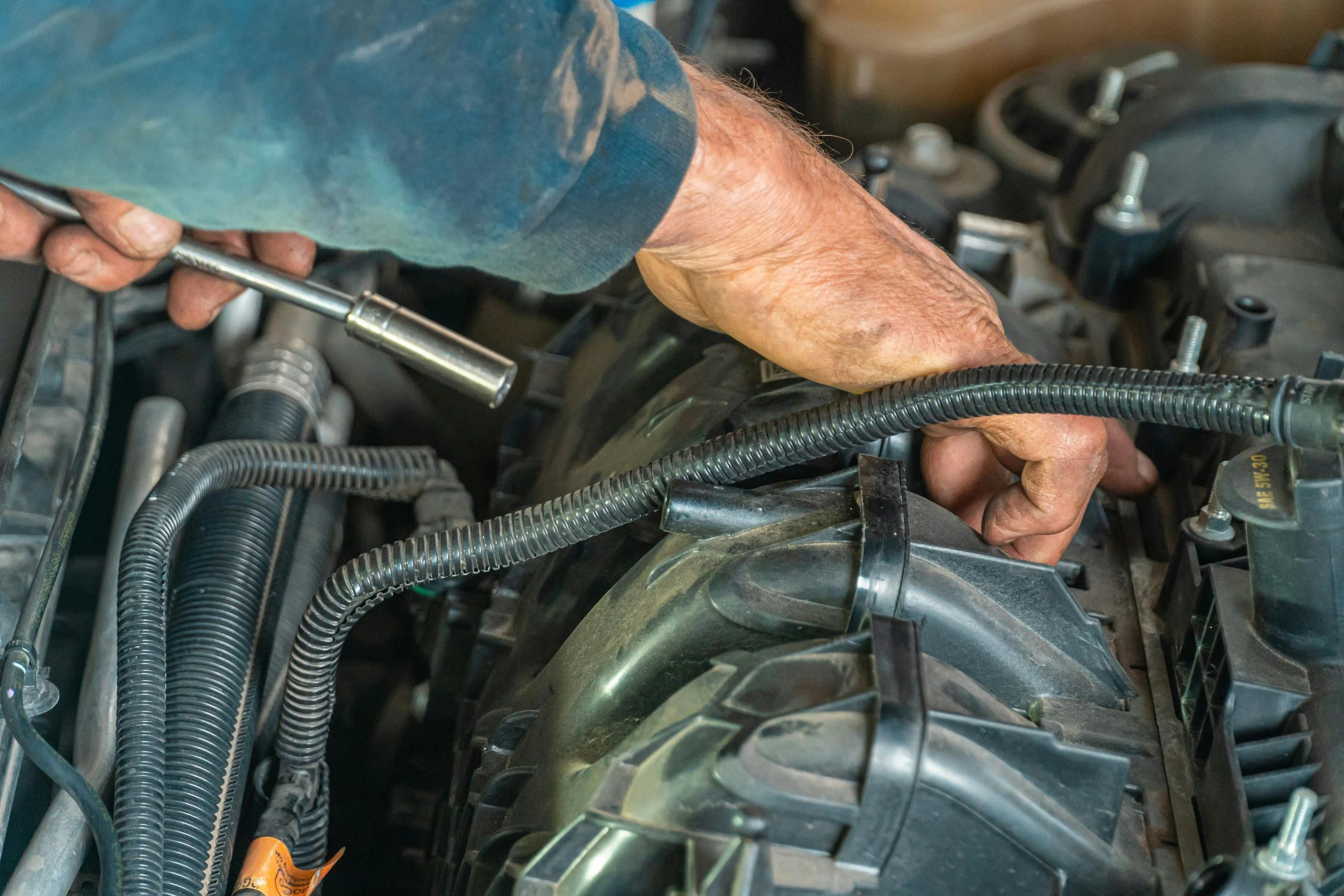
What we do: Our technicians dive under the hood to perform live physical and digital testing. How it works: If the code points to a cylinder misfire, we don't just guess and sell you a new engine. We use advanced scopes to test the spark plugs, ignition coils, and fuel injectors in real-time. This ensures we isolate the exact failing part before making any repair recommendations.
📋 Step 3: Transparent Reporting & Fixed Pricing
What we do: We present you with a clear digital health report of your vehicle. How it works: We explain the code, show you what caused it, and provide an itemized estimate for the fix. Whether it’s a minor sensor replacement or a more complex mechanical repair, you approve the work before we ever turn a wrench.
From Minor Sensors to Complex Repairs
An engine light can trigger for over a thousand different reasons. Here are the most common issues we diagnose and repair every day:
The Minor Fixes (Sensors & Seals): * Oxygen (O2) Sensors: Measures the unburned oxygen in the exhaust. If it fails, your fuel efficiency plummets.
Mass Airflow (MAF) Sensor: Measures the air entering the engine. A faulty MAF causes stalling and rough idling.
Loose Gas Cap: Believe it or not, a loose or cracked cap disrupts the fuel system pressure, triggering the light!
The Complex Issues (Mechanical & Emissions):
Catalytic Converter: Responsible for turning harmful gases into safer emissions. Usually fails due to ignored minor sensor issues.
Ignition Coils & Spark Plugs: The components that ignite the fuel. When they fail, your engine misfires, shakes, and loses power.
EGR (Exhaust Gas Recirculation) Valves: Crucial for regulating your engine's combustion temperatures.
Why You Shouldn’t Ignore the Light
It’s tempting to ignore a check engine light if the car "feels fine." However, driving with an active light can cause a domino effect:
Wasted Fuel: Many codes force your engine into a backup "limp mode," which burns significantly more gasoline.
Costly Collateral Damage: A minor $150 spark plug issue, if ignored for too long, can destroy a $1,500 catalytic converter.
Failed Emissions: A vehicle with an active check engine light will automatically fail state emissions testing.